You can feel it about 10 minutes into the interview. Two candidates. Similar resumes. Both say all the right things. But one of them leaves you uneasy and you can’t quite explain why.
For owners in construction, trades, and service-based businesses, skilled labor hiring isn’t just about filling seats, it’s about protecting your time, your culture, and your margins. And yet, most interviews focus on the wrong signals: years of experience, certifications, and whether someone “seems like a good guy.”
But those aren’t what actually separate great hires from expensive mistakes. Let’s break down what really sets candidates apart and how to spot it before it costs you.
The Resume Is the Starting Line, Not the Finish
Resumes can be misleading. You’ll see candidates with 10+ years of experience who struggle with accountability. And you’ll meet someone with three years who runs circles around your current team.
Why? Because experience doesn’t equal effectiveness.
According to a Leadership IQ study, 89% of hiring failures are due to “attitude,” not technical ability. That means most bad hires weren’t lacking skill. They were lacking mindset, communication, or accountability.
That stat hits especially hard in people-driven businesses where one weak link can slow down an entire crew or derail a job.
If your interview process is weighted toward experience, you’re gambling.
What Actually Sets Candidates Apart
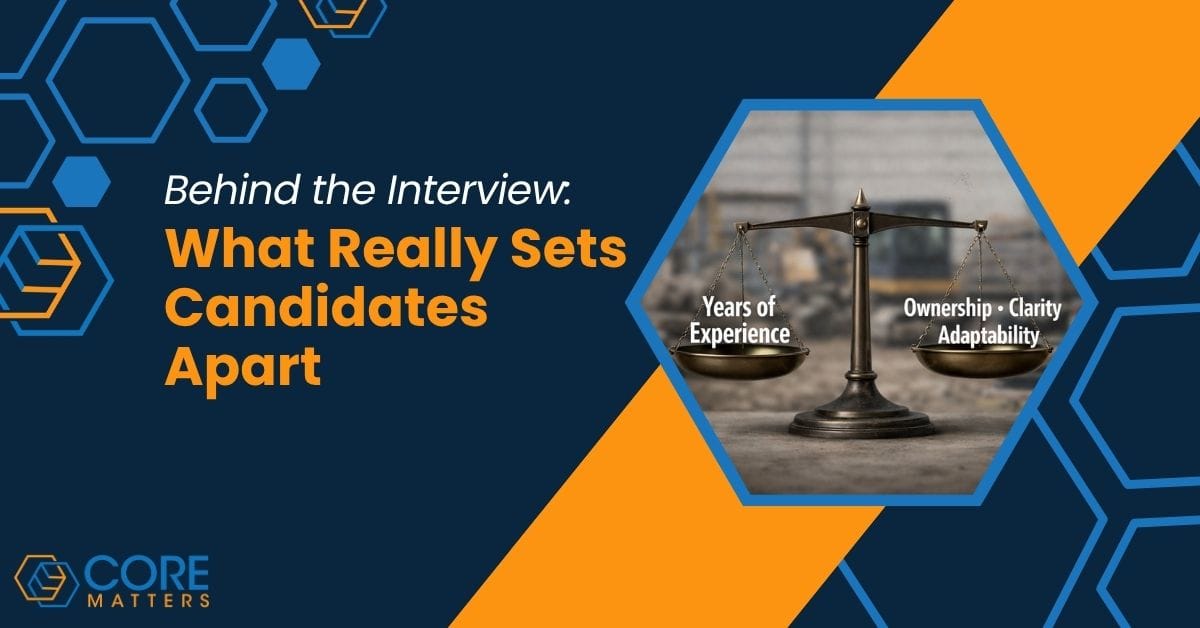
When you break it down, the candidates who succeed in skilled labor jobs consistently show three things:
1. Ownership Over Outcomes.
Average candidates talk about what they were told to do.
Strong candidates talk about what they owned.
There’s a difference between:
- Average: “I installed HVAC systems on commercial projects.”
- Strong: “I was responsible for making sure installs passed inspection the first time. Precision and customer satisfaction are always my focus.”
Ownership shows up in how someone describes their past.
2. Clarity in Communication.
Poor communication doesn’t just cause confusion. It creates rework, delays, and frustrated customers.
During your next interview, listen closely to how candidates explain things:
- Do they ramble or explain situations clearly?
- Do they blame others or take accountability?
- Can they walk you through a problem step-by-step?
If you want to avoid callbacks and customer complaints, communication matters. In the AI era, anyone can have a perfect resume. It’s important your interview questions uncover the authentic candidate if you want to continue growing and scaling.
3. Evidence of Adaptability.
Your business isn’t static. Jobs change. Schedules shift. Customers throw curveballs. And the best candidates show they can adjust without falling apart.
If you want to assess adaptability, ask about:
- A job that didn’t go as planned.
- A difficult customer.
- A time they had to learn something quickly.
You’re not just listening for the story. You’re evaluating how they think. Do they get stuck in the problem? Or do they move toward solutions?
Why Most Interviews Miss This
Most owners aren’t bad at hiring. They’re just inconsistent. Interviews often turn into:
- Casual conversations.
- Gut-feel decisions.
- “I like this person” hires.
Without structure, you end up evaluating different things for each candidate. And that’s how you hire someone who interviews well but performs poorly. Or, you pass on someone great because they didn’t “click” immediately.
A Better Way to Interview
If you want better outcomes, your interview needs to focus on behaviors, not just background.
Here’s how to shift:
- Ask for specifics, not summaries. Instead of “Tell me about your experience,” ask: “Tell me about a time a job went sideways. What happened and what did you do?”
- Listen for patterns, not one-off answers. Anyone can give one good answer. Look for consistency across multiple questions.
- Score candidates against defined criteria. Ownership. Communication. Adaptability. If you’re not measuring it, you’re guessing.
- Align your team on what the right fit looks like. If one manager values speed and another values precision, you’ll keep hiring inconsistently.
The Real Cost of Getting This Wrong
Bad hires don’t just cost salary and leadership frustration. They cost:
- Crew productivity.
- Customer trust.
- Your time fixing problems.
- Morale from top performers carrying the load.
And the worst part? Most of it is preventable. Because the signs were there, you just didn’t have a system to catch them.
The Difference Between Guessing and Getting It Right
The best candidates don’t just have the right experience. They show you how they think, how they communicate, and how they take ownership, if you know what to look for. And once you see it, you can’t unsee it.
If your interviews feel inconsistent, or you’re tired of hires that don’t live up to what you saw on paper, it’s time to fix the process behind them. In our free masterclass, we break down exactly how to build a skilled labor hiring system that consistently identifies the right candidates before they’re on your payroll. It’s time for you to hire better people faster.